
Friends!
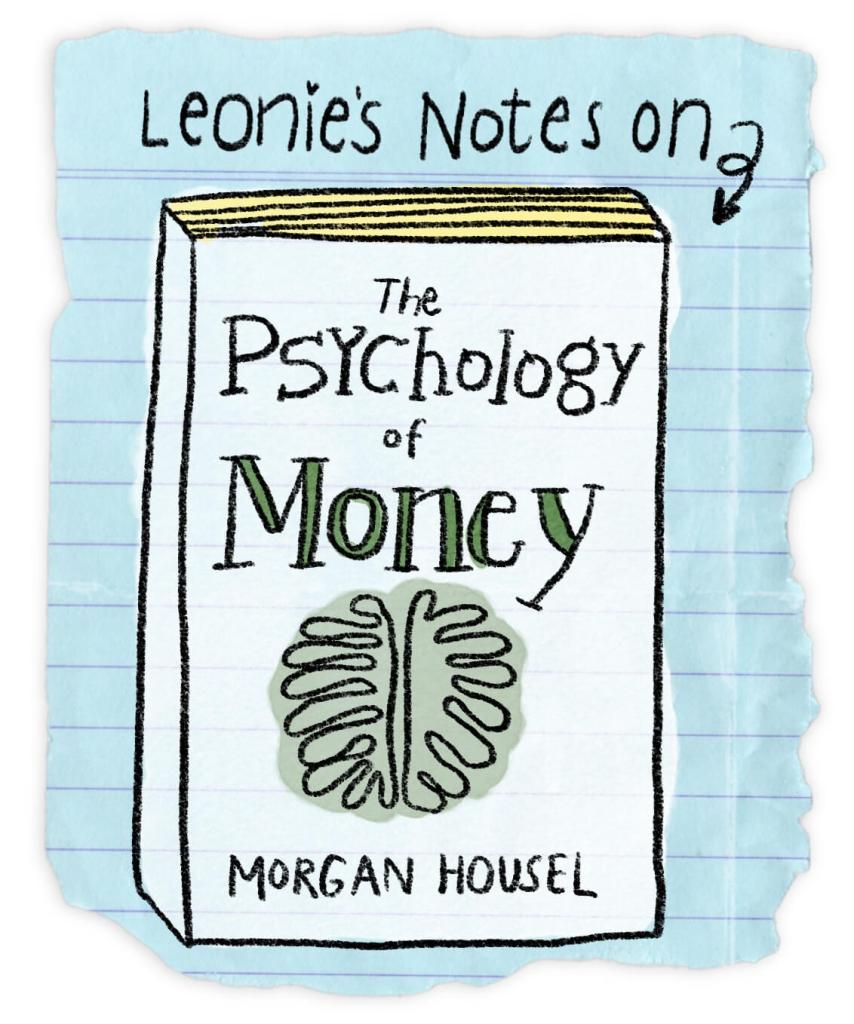
Just finished reading Morgan Housel’s “The Psychology of Money.”
Apparently it’s now sold 8 million copies (!!!!) and after reading it… I can understand why.
I don’t think I’ve read a money book like this before. A fascinating approach of how we look at money and make financial decisions from a psychological and emotional perspective. Filled with stories, it’s cheerily readable and a bloody useful read.
Also: after reading this book, my husband and I cancelled our DoorDash account after discovering the horrifying amount we’ve been spending on delivery!
Righto, here’s my notes… but I highly recommend reading it yourself!

- A genius who loses control of their emotions can be a financial disaster. The opposite is also true. Ordinary folks with no financial education can be wealthy if they have a handful of behavioural skills that have nothing to do with formal measures of intelligence.
- You can understand the financial crisis better if it is explained through the lenses of psychology and history, not finance.
- Everyone has their own unique experience with how the world works. And what you’ve expenced is more compelling than what you learn secon-dhand. All of us go through life anchored to a set of views about how money works that vary wildly from person to person. What seems crazy to you might make sense to me.
- The person who grew up when inflation was high experienced something the person who grew up with stable prices never had to.
- The Australian who hasn’t seen a recession in 30 years has experienced something no American ever has.
- Your personal experiences with money make up maybe 0.00000001% of what’s happened in the world, but maybe 80% of how you think the world works.
- We all think we know how the world works, but we’ve only experienced a tiny sliver of it.
- People’s lifetime investment decisions are heavily anchored to the experiences those investors had in their own generation – especially experiences early in their adult life.
- Financial systems have been around for a very short period of time – widespread use of mortgages, credit cards and car loans did not take off until after World War II, index funds are less than 50 years old, the Roth IRA was not born until 1998. It should surprise no one that many of us are bad at savings and investing for retirement. We’re all just nembies.
- Dogs were domesticated 10,000 years ago and still retain some behaviours of their wild ancestors. Yet here we are, with between 20 and 50 years of experience in the modern financial system, hoping to be perfectly acclimated.
- Look for broad examples of averaged out financial results instead of outliers. It’s hard to know what works, what is risk and what is dumb luck.

- Arrange your financial life so that a bad investment here and a missed financial goal there won’t wipe you out. Forgive yourself for failures.
- No one wants to hold cash during a bull market. They want to own assets that go up a lot. You look and feel conservative holding cash during a bull market, because you become acurtely aware of how much return you’re giving up by not owning the good stuff. But if that cash prevents you from having to sell all your stocks during a bear market, the actual return you earned on that cash is excellent.
- The idea that something can gain over the long run while being a basketcase in the short run is not intuitive, but it’s how a lot of things work in life.
- Destruction in the face of progress is not only possible, but an efficient way to get rid of excess.
- Economics, markets and careers often follow a similar part – growth amid loss.
- You can wrong half the time and still make a fortune.

- The hardest financial skill is getting the goalpost to stop moving. Beware of lifestyle creep!
- If the taste of having more – more money, more power, more prestige – increases ambition faster than satisfaction, it becomes dangerous.
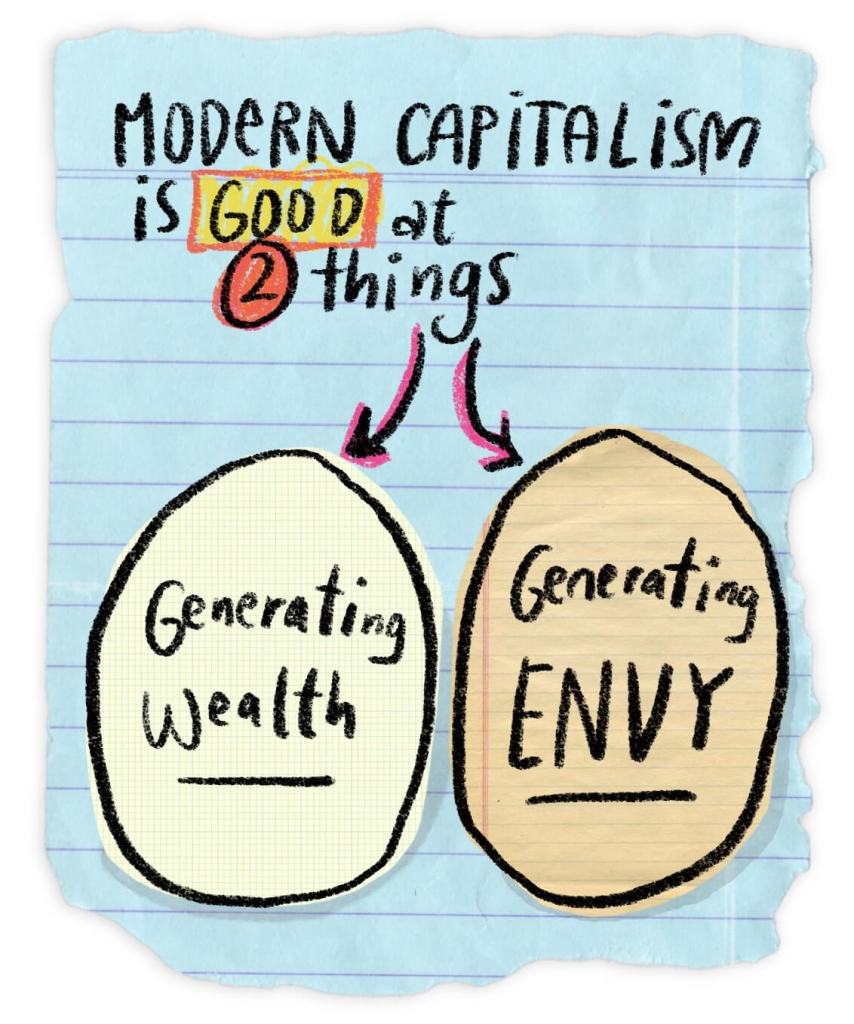
- Social comparison is the biggest issue – it makes you feel as though you don’t have enough. The battle of social comparison can never be won, as there will always be someone wealthier than you.
- $81.5 billion of Warren Buffett’s $84.5 billion net worth came after his 65th birthday. Our minds are not built to handle such absurdities.
- Compound over time = wealth.
- Good investing is not necessarily about making good decisions. It’s about consistently not screwing up.
- There’s only one way to stay wealthy – a combination of frugality and paranoia.
- The ability to stick around for a long time, without wiping out completely or being forced to give up, is what makes the biggest difference.
- Is investing in the stock market through index funds really just betting that humans will innovate?
- We can spend years trying to figure out why Warren Buffett has achieved his wealth. But what’s equally important is what he didn’t do:
He didn’t get carried away with debt.
He didn’t panic and sell during the 14 recessions he’s lived through.
He didn’t sully his business reputation.
He didn’t attach himself to one strategy, one world view or one passing trend.
He didn’t burn himself out.
He survived, and survival gave him longevity. And that survival compounded into great wealth.

- “More than I want big returns, I want to be financially unbreakable.”
- We underestimate how normal it is for a lot of things to fail. Which causes us to overreact when they do.
- The great art dealers operated like index funds. They bought everything they could. And they bought it in portfolios, not individual pieces they happened to like. Then they sat and waited for a few winners to emerge.
- If a venture capitalist makes 50 investments they likely expect half of them to fail, 10 to do pretty well, and one or two to be bonanzas that drive 100% of the fund’s returns.
- If you’re a good business leader maybe half of your product and strategy ideas will work.
- With both investors and entrepreneurs – no one makes good decisions all the time.
- No comedic genius is smart enough to preemptively know what jokes will land well. Every big comedian tests their material in small clubs before using it in big venues.

- John D Rockefeller was one of the most successful businessmen of all time. He was also a recluse, spending most of his time by himself. He rarely spoke, deliberately making himself inaccessible. – MY DREAM HAHAHA!
- Rockefeller’s product wasn’t what he did with his hands or his words. It’s what he figured out inside his head. Despite sitting quietly most of the day in what might have looked like free time, he was constantly working in his mind thinking problems through.
- (Cal Newport speaks about developing the capacity to self reflect and think something through.)
- Over a hundred years ago, few professions relied on a worker’s brain. You didn’t think, you laboured, without interruption and your work was visible and tangible. It also meant that our days ended when we clocked out and left the factory/farm. But as a knowledge worker, we’re constantly working in our hands, which means it feels like work never ends.
- The author of the book 30 Lessons For Living interviewed a thousand elderly Americans looking for the most important lessons they learned and wrote:“No one – not a single person out of a thousand – said that to be happy you should try to work as hard as you can to make money to buy the things you want.
No one – not a single person – said it’s important to be at least as wealthy as the people around you, and if you have more than they do it’s a real success.
No one – not a single person – said you should choose your work based on your desired future earning power.”He also wrote:“Your kids don’t want your money (or what your moeny buys) anywhere near as much as they want you. Specifically, they want you with them.” - In a letter Morgan wrote to his infant son, he wrote:“You might think you want an expensive car, a fancy watch, and a huge house. But I’m telling you, you don’t. What you want is respect and admiration from other people, and you think having expensive stuff will bring it. It almost never does – especially from the people you want to respect and admire you.”

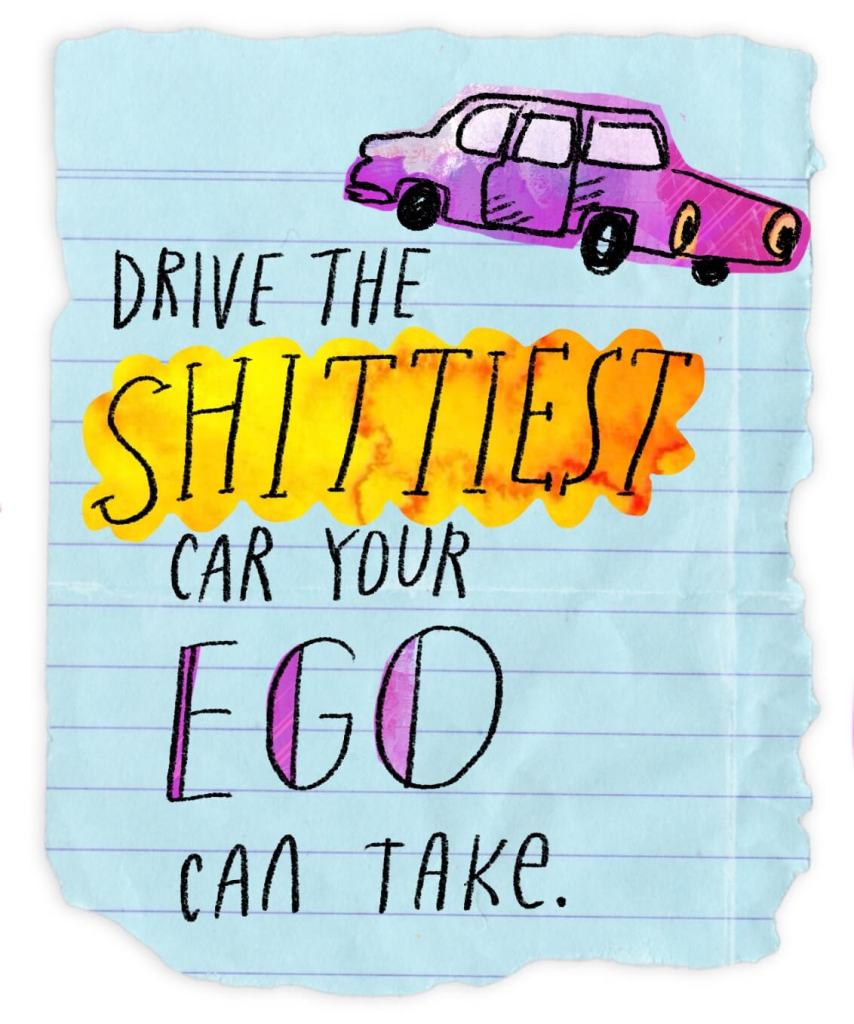
- If you see a Ferrari driving around, you might intuitively assume the owner of the car is rich, but that’s not always the case. Many owners are mediocre successes who spent a huge percentage of their paycheck on a car.
- Someone driving a $100,000 car might be wealthy. But the only data point you have about their wealth is that they have $100,000 less than they did before they bought the car (or $100,000 more in debt. That’s all you know about them.

- We tend to judge wealth by what we see, because that’s the information we have in front of us. We can’t see people’s bank accounts or brokerage statements. So we rely on outward appearances to gauge financial success. Cars, homes, Instagram photos.
- Wealth is what you don’t see. Wealth is the nice cars not purchased. The diamonds not bought. The watches not worn, the clothes forgone and the first-class upgrade delined. Wealth is financial assets that haven’t yet been converted into the stuff you see (i.e. retirement accounts, investment portfolios, stocks, term deposits, real estate, assets, cash).

- Rihanna nearly went bankrupt after overspending and sued her financial advisor. The advisor responded: “Was it really necessary to tell her that if you spend money on things, you will end up with the things and not the money?”
- When most people say they want to be a millionaire, what they might actually mean is “I’d like to spend a million dollars.” And that is literally the opposite of being a millionaire.
- The only way to be wealthy is to not spend the money you do have.
- Less ego, more wealth.
- No matter how much you earn, you will never build wealth unless you can put a lid on how much fun you can have with your money right now.

- Rich is a current income. It’s easy to spot rich people. But wealth is hidden. It’s income not spent.
- Most people deep down want to be wealthy. They want freedom and flexibility, which is what financial assets not yet spent can give you. But it is so ingrained in us that to have money is to spend money that we don’t get to see the restraint it takes to actually be wealthy.
- People are good at learning by imitation. But the hidden nature of wealth makes it hard to imitate others and learn from their ways.
- The world is filled with people who look modest but are actually wealthy and people who look rich who live at the razor’s edge of insolvency.

- Past a certain level of income people fall into three groups:
1. Those who save
2. Those who don’t think they can save
3. Those who don’t think they need to save. - Building wealth has little to do with your income or investment returns, and lots to do with your savings rate.
- View your financial destiny as powered by your own frugality and efficiency.
- Wealth is just the accumulated leftovers after you spend what you take in.
- When you define savings as the gap between your ego and your income, you realise why many people with decent incomes save so little. It’s a daily struggle against insticts to extend your peacock feathers to their outermost limits and keep up with others doing the same.
- People with enduring personal financial success tend to have a propensity to not give a damn what others think about them.
- You can spend less if you desire less.
And you will desire less if you care less about what others think about you.

- History is littered with good ideas taken too far, which are indistinguishable from bad ideas.
- Giving yourself room for error lets you endure a range of potential outcomes.
- We must accept the reality of our changing minds. Sunk costs – anchoring decisions to past efforts that can’t be refunded – are a devil in a world where people change over time.
- It can be hard to maintain a long-term outlook when stocks are collapsing. But volatility is the cost of investing. It’s not a fine, it’s the fee. And holding onto stocks instead of selling means the payout is worth it.
- Why do so many people who are willing to pay the price of cars, houses, food and vacations try so hard to avoid paying the price of good investment returns?
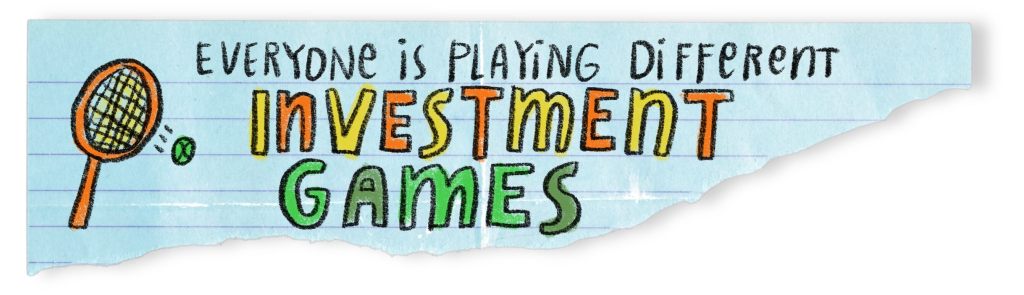
- Beware of taking financial cues from people playing a different game than you are.
- Bubbles form (i.e. dot com bubble, house flipping in Florida) when the momentum of short-term returns attracts enough money that investors shift from mostly long term to short term.
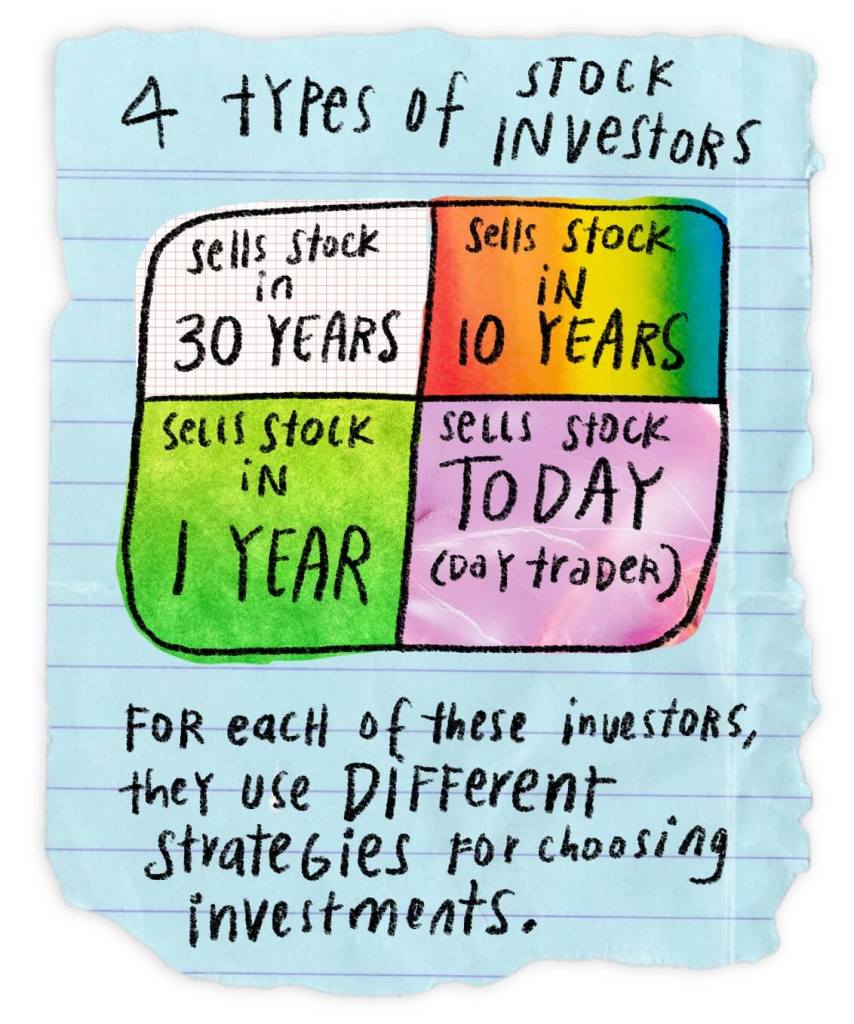
- Short-term traders and day traders operate in an area where the rules governing long-term investing – particularly around valuation – are ignored, because they’re irrelevant to the game being played.
- Many financial and investment decisions are rooted in watching what other people do and either copying them or betting against them. But when you don’t know what kind of investor they are, and what investment goals they have, their decisions are likely not the right ones for you.
- Morgan says: “what the market did this year, or whether we’ll have a recession this year is irrelevant to the game I’m playing. So I don’t play attention to it, and am in no danger of being persuaded by it.”
- Optimism is the best bet for most people because the world tends to get better for most people most of the time.
- Pessimism isn’t just more common than optimism, it also sounds smarter.
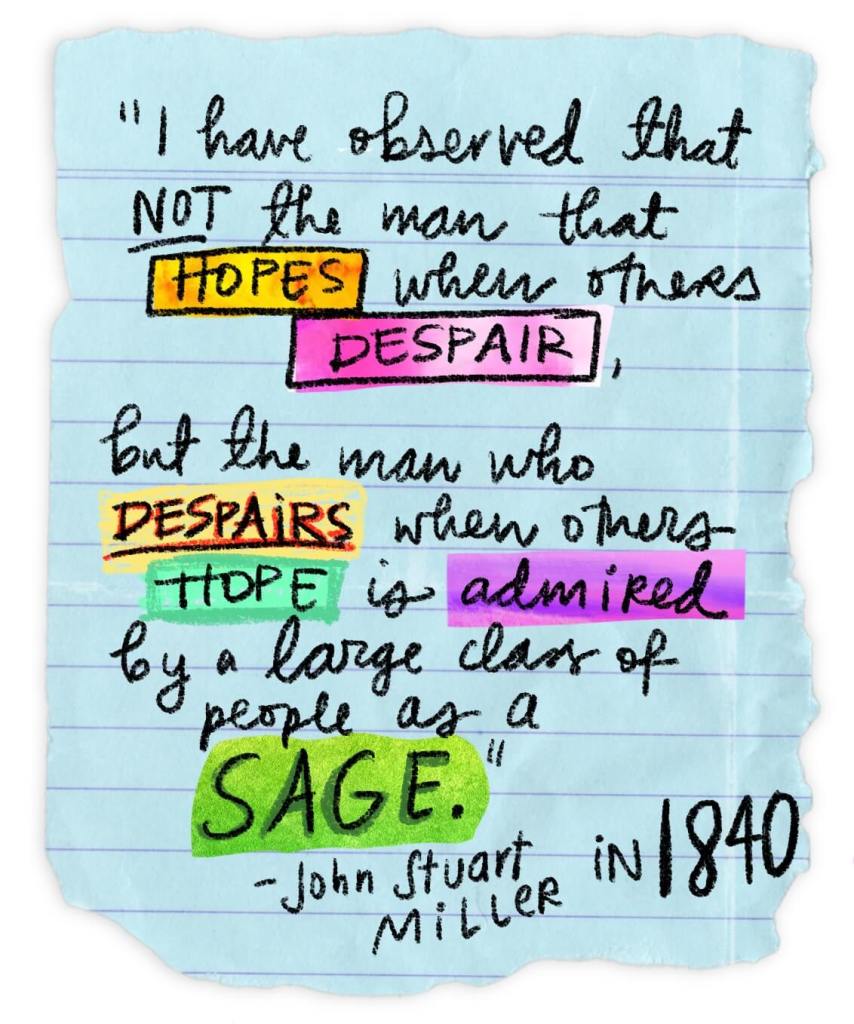
- “For reasons I have never understood, people like to hear that the world is going to hell.” – Historian Deirdre McCloskey
- Optimism is a believe that the odds of a good outcome are in your favour over time, even if there are setbacks along the way.
- Forecasts of optimism are rarely taken as seriously as prophets of doom.
- “If you say the world has been getting better you may get away with being called naive or insensitive. If you say the world is going to go on getting better, you are considered embarrasingly mad.” – Matt Ridley
- “Every group of people I ask thinks that the world is more frightening, more violent and more hopeless than it really is.” – Hans Rosling in his book “Factfulness.”
- When directly compared or weighted against each other, losses loom larger than gains. Stocks rising 1% might be briefly mentioned in the news, but a 1% fall will be reported in bold, all-caps letters usually written in blood red.
- There is an iron law in economics: extremely good and extremely bad circumstances rarely stay that way for long because supply and demand adapt in hard-to-predict ways.
- Threats incentive solutions in equal magnitude.
- I am, like all humans, susceptible to explaining the world through the limited set of mental models I have at my disposal. And I’m wrong about a lot of them, because I know a lot less about how the world works than I think I do.
- Business, economics and investing are fields of uncertainty because they are driven by the vagaries of human behaviour and emotions.
- Manage your money in a way that helps you sleep at night.
- Become OK with a lot of things going wrong. You can be wrong some of the time and still make a fortune.
- No matter what you’re doing with your money, you should be comfortable with a lot of stuff not working. That’s just how the world is.

- Measure how you’ve done by looking at your full portfolio, rather than individual investments.
- You don’t need to be coldly rational with your investments; just psychologically reasonable.
- Morgan’s own simple investment strategy: paid off mortgage and money from every paycheck going into low cost Vanguard index funds.
- Be less flashy.
- There is no single right answer; just the answer that works for you.
- Maintain the lifestyle of when you earned much less money – and put the rest into savings & investments.
- Stop the goalpost of lifestyle desires moving even when your income grows.

It was such a glorious and inspiring read… such a sensible take on money… that it’s inspired me to do a personal money curriculum.

I had a scurry through my To Be Read voluminous collection… and looky wooky! I’ve already got a most excellent pile! The joys of being a book hoarder!
If you’re interested, here’s my 5 all-time favourite money books.
This was gloriously fun!
Hope you adored these notes just as much as I adored creating them.
Happy reading & learning & money-growing my friends!
Big love,